
It’s the first truly cold day of the year. When cheeks look flushed, new fine lines suddenly appear on your forehead, and your usual moisturizer seems to vanish on contact, it’s time to retire lightweight summer products.
Good news for lazy girls like me: you don’t need a dozen steps. A few smart swaps will do it.
The right winter skincare routine keeps the dry patches and redness away and keeps your glow alive while the sun is playing hard to get.
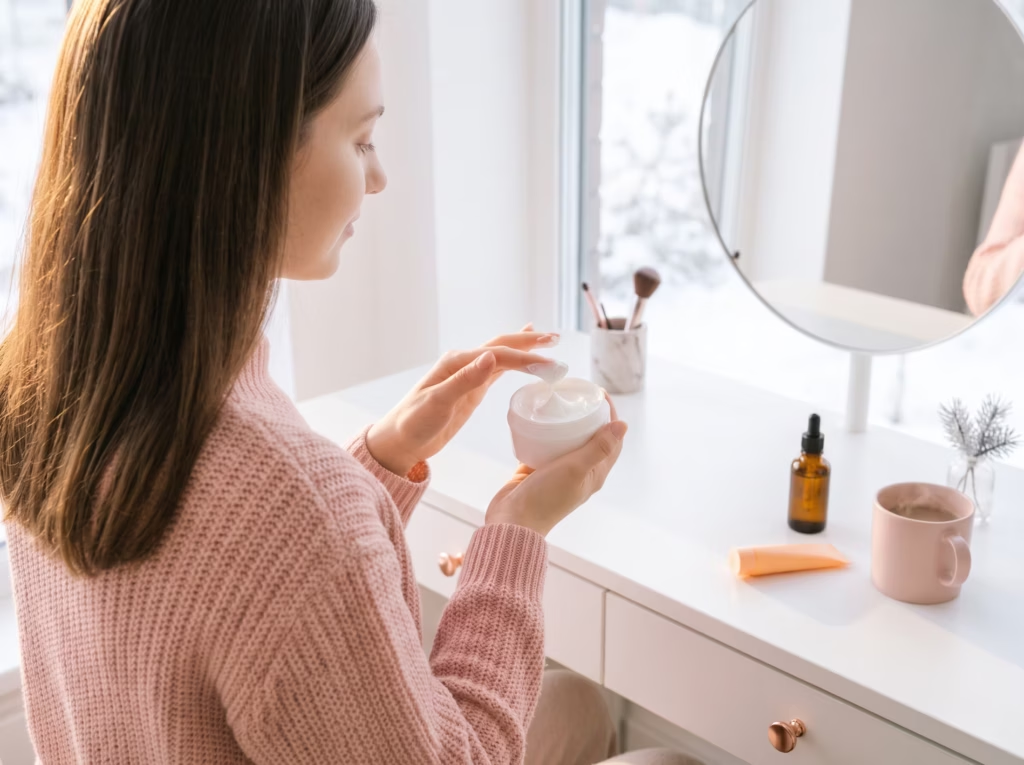
Why a Winter Skincare Routine is So Important
Fall to winter is the roughest stretch of the year for your skin barrier. You go from cold wind to an office blasting dry heat ten times a day, and your skin basically gets jet lag every time.
Cold air holds very little water, and heating dries it out even more. In one study, women who spent six hours a day in a heated office at under 20% humidity ended up with redder, rougher skin and more water loss through the skin. Cold also turns down your skin’s own oil production, which hits its lowest point of the year in winter. That’s why the cream you adored in July suddenly stings in December.
Last December, on my birthday, my foundation started looking patchy on my forehead and I blamed the foundation before I realized it was my dehydrated skin.
Common Winter Skin Problems + Their Quick Fixes
With a little bit of care and the right cold weather skincare approach, they’re usually fixable.
Cold weather face rashes vs. windburn
Windburn usually feels raw and chapped, like a sunburn but from the cold, and it’s typically on the parts of your face most exposed to the elements.
A general rash or a sudden eczema flare-up often appears as itchy, red and sometimes slightly scaly patches that can show up anywhere, even in places your scarf covers.
If it’s itchy and patchy, it’s likely irritation from dryness. If it’s just sore and red, it’s probably windburn.
For windburn, pause your actives for a few days, smooth a thick fragrance-free balm over your cheeks and nose before you head out and keep your scarf up on windy days.
If the patches crack, bleed or spread, or they haven’t improved after a week or two of gentle care, book a dermatologist. Winter is peak season for eczema and rosacea flares and both calm down much faster with proper treatment.
When your moisturizer suddenly stings
If you apply your regular, trusted moisturizer and it suddenly stings or burns, especially around your nose and cheeks, listen up. It’s a major red flag that your protective barrier has been damaged and has microscopic cracks in it. Your skin is simply too vulnerable at that moment, and the 48-hour reset below is the quickest way to calm it down.
Flaky yet congested skin
A flaky, dry surface layered over clogged pores and underlying bumps is one of the most common winter skin paradoxes.
Desert on top, oil slick underneath. Winter is rude like that. Excess oil gets trapped under a layer of dry, dead skin cells, which is how you end up with whiteheads on skin.
A targeted chemical exfoliant can fix it. Swap harsh physical scrubs for a gentle PHA or lactic acid liquid exfoliant one or two nights a week to dissolve the surface flakes. Follow immediately with a non-comedogenic gel-cream so the dryness doesn’t kick the cycle off again.
The 48-hour skin reset
After stripping my barrier with too many acne spot treatments one January, I learned that stinging, red patches require an immediate emergency reset. All you need to do is:
- Stop everything: for two days, pause all actives. Stop using retinoids, vitamin C, exfoliating acids, and scrubs entirely.
- Cleanse gently: use only lukewarm water or a simple, milky, non-foaming cream cleanser. Pat your skin dry very gently.
- Soothe and calm: Spritz your face with a thermal water spray and, while it is still damp, apply a thick, fragrance-free balm containing ceramides, cica, or panthenol.
- Repeat: Do nothing but this simple routine for two days, or until the stinging and redness have completely subsided.

How to Apply Your Products
A good winter skincare routine depends on the order you apply your products in as much as the products themselves.
Rule #1: Water first on damp skin. Thinnest to thickest is the rule here. After cleansing, while your skin is still slightly damp, press in your most watery products. This includes essences, hydrating mists and thin, liquidy serums. Applying them to damp skin helps trap that initial layer of water, giving the rest of your products a hydrated base to work with.
Rule #2: Creams and butters in the middle. Next comes the comfort step. This is where you apply your richer lotions and creams. These products are packed with emollients that soften and deeply moisturize the skin. This is your main nourishing layer that provides the cushion and relief your dry skin is craving.
Rule #3: Seal everything at night. After your moisturizer has had a minute to absorb, press a few drops of a simple face oil over top for softness, or a thin layer of a rich balm or petrolatum if your skin is very dry. Oils only add a light seal. Balms and petrolatum do the heavy sealing, aka slugging and work like a raincoat for your skin.
Rule #4: Sunscreen goes last in the morning. Skip the oil or balm in the AM. Once your moisturizer has settled for a minute or two, finish with SPF so it sits evenly and doesn’t slide around.
Simple AM and PM Winter Skincare Routines for Every Skin Type
Our skin’s needs can change drastically in the winter, so here are some simple, practical routines for your skin type. Listen to your skin, since some days you might need a little more and some days a little less.
For Dry and Dry-Sensitive Skin
Your goal is all about comfort and repair. So, you’ll need soft, creamy textures and gentle, soothing ingredients. This is the time to embrace rich, hydrating winter products.
Morning (AM) Routine:
- Gentle rinse with lukewarm water or cleanse with a soothing milky cream cleanser.
- Press a milky, hydrating toner into damp skin.
- Apply a rich ceramide cream to restore deep comfort and strengthen your barrier. Some of the most nourishing formulas use unique ingredients, like those found in the best donkey milk products we’ve reviewed.
- Finish with a moisturizing daily sunscreen, SPF 30 or higher.
Evening (PM) Routine:
- Melt away makeup and grime with a nourishing cleansing balm.
- Apply a soothing recovery serum with ingredients like oat, panthenol or peptides.
- Slather on a thick barrier repair cream.
- Optionally, press 2–3 drops of pure squalane oil over your driest spots.
For Acne-Prone and Oily Skin
The key for you is maintaining hydration to keep your skin balanced. If you strip your skin with harsh products, it will panic and produce even more oil. Gentle is the name of the game.
Morning (AM) Routine:
- Wash with a mild, non-stripping gel cleanser. A good salicylic acid face wash can be great, but make sure it’s a gentle formula.
- Use a calming, balancing toner with niacinamide or green tea.
- Apply an oil-free lotion or a hydrating gel-cream that won’t clog pores.
- Finish with a lightweight, non-greasy sunscreen.
Evening (PM) Routine:
- Double cleanse, starting with micellar water and following with your gentle gel wash.
- Use a gentle blemish-clearing step. Azelaic acid is fantastic for winter as it calms redness and clears pores without causing major peeling.
- Apply a plumping hydration serum with hyaluronic acid (on damp skin!).
- Finish with a lightweight barrier lotion to keep skin balanced.
For Combination Skin
Your strategy is zone moisturizing. Give the different parts of your face what they individually need. It’s like ordering half-and-half on a pizza.
Morning (AM) Routine:
- Use a gentle foaming or cream-to-foam wash.
- Apply a balancing hydrating toner all over.
- Moisturize in zones: use a lightweight lotion on your T-zone (forehead, nose, chin) and a richer cream on your drier cheeks.
- Finish with a fluid, lightweight SPF.
Evening (PM) Routine:
- Perform a gentle makeup-removing cleanse.
- Apply a light hydrating serum all over your face.
- Target your moisture again: a richer balm on dry patches and a light lotion across your T-zone.
For Getting That Glow
If your main concern is winter dullness, you want to boost radiance without irritation. Gentle brightening and consistent hydration work here.
Morning (AM) Routine:
- A refreshing splash of water or a hydrating cleanser is all you need.
- Apply a stable, gentle Vitamin C serum to fight dullness and protect your skin.
- Follow with a dewy daily moisturizer.
- Finish with a glow-finish broad-spectrum sunscreen. For an extra pop of life, a touch of cream blush can work wonders.
Evening (PM) Routine:
- Double cleanse thoroughly to melt away sunscreen and daily grime.
- Use a gentle liquid exfoliant (like lactic acid or a PHA) just 1–2 nights a week. No harsh physical scrubs!
- Apply a peptide-packed night cream for a plump, bouncy feel in the morning.
Winter Skincare Routine for Men
Two minutes, tops, so nobody gets to say they didn’t have time. The best routine is one you’ll actually do. It’s simple yet effective.
Morning (AM) Routine:
- Use a quick, no-fuss face wash in the shower.
- Apply a soothing, alcohol-free post-shave balm or a simple hydrating toner.
- Use an all-in-one daily moisturizer with SPF 30 or higher. One step and you’re done.
Evening (PM) Routine:
- Wash your face with lukewarm water and a gentle cleanser to clear away sunscreen and daily grime.
- Rub a comforting night cream into your skin, including over any stubble or onto your forehead.

Essential Winter Beauty Tips You Can’t Miss
Beyond your daily routine, a few simple habit changes can make a huge difference in keeping your skin happy all winter long.
- Turn down the shower knob. A long, steaming hot shower feels incredible on a cold day, but it’s one of the fastest ways to strip your skin’s natural protective oils. Stick to lukewarm water, especially when washing your face.
- Plug in a bedroom humidifier. It’s the cheapest skincare upgrade you’ll ever plug in. Running a humidifier in your bedroom at night puts moisture back into the dry, heated air, so your skin stays hydrated while you sleep. Keep the room at around 40 to 50% humidity, which keeps skin comfortable without inviting dampness.
- Treat your lips and hands. These areas have thinner skin and fewer oil glands, making them extra vulnerable to cracking. Licking your lips feels like a fix for about four seconds. Slather on a thick ointment or balm right before bed. A good lip treatment, like the Indē Wild DLT really helps. By day, switch to a lip balm with SPF and try not to lick your lips, since saliva evaporates fast and leaves them drier.
- Don’t stash the sunscreen. UV rays don’t take a winter vacation. In fact, fresh snow can reflect up to 80% of UV radiation, meaning you can get hit by the same rays twice. Snow is basically a giant reflector you’re standing on, which is why Dartmouth Health calls winter sun seriously damaging. UV also climbs about 10% with every 1,000 metres of altitude, which makes ski trips extra risky for bare skin.
Popular Brands for Winter Skin Care Worth Checking Out
These trusted brands are known for their excellent winter-friendly formulas.
Drugstore heroes
- CeraVe: Known for its no-fuss, ceramide-packed formulas that are perfect for barrier support. Start with the Moisturizing Cream in the tub.
- Vanicream: The go-to for ultra-sensitive, reactive skin. Their products are free of common irritants. Their Moisturizing Cream is a winter staple.
- La Roche-Posay: Famous for its soothing thermal water and rich Cicaplast Baume B5+ that rescues irritated skin.
- Bioderma: A French pharmacy staple, their Atoderm Intensive Baume is fantastic for dry, compromised skin.
Cult favorites
- Skinfix: Their Barrier+ line is a favorite for serious barrier repair and eczema-prone skin.
- Biossance: They specialize in sustainable, hydrating squalane, which is a brilliant winter moisturizer.
- Paula’s Choice: Offers a wide range of effective, science-backed formulas, including rich moisturizers and gentle exfoliants.
- Avène: Another French brand centered around soothing thermal spring water, ideal for calming redness.
Some Commonly Asked Questions…
Not necessarily! If your skin is feeling sensitive, you might want to reduce the frequency, but you don’t have to stop completely. Try the sandwich method: apply a thin layer of simple moisturizer, wait a few minutes, apply your retinol, wait again, and then apply another layer of moisturizer over top. This buffers the retinol, so you get the benefits with a much lower risk of irritation.
No, they do different jobs. Creams and lotions, which contain both oil and water, are what actually deliver hydration to your skin. Face oils are mostly emollients. They soften skin and add a light seal on top, but they carry no water of their own. Using an oil on its own without a hydrator underneath is like putting a lid on an empty pot. You need the cream first for the oil to have something to seal in.
Not by much, unless you’re actually dehydrated. Studies show only small changes in skin hydration from drinking extra water, so a humidifier and a richer moisturizer will do far more for tight winter skin.
Start when the heating comes on, or when your skin feels tight right after cleansing. Swap one product at a time over a week or two and patch-test any richer cream on your jaw for a few days first.
A final thought on your winter skin
Building a solid winter skincare routine comes down to listening to your skin and giving it a little extra comfort until spring. Pick one swap from this list tonight, maybe the humidifier or a richer night cream, and let your skin thank you by weekend.