
You followed the tutorial, bought the viral serums, and applied everything just so. But still, those tiny flakes roll off the cheeks the second your foundation brush touches your skin.
Truth be told, more steps do not mean better results. This is the first thing you need to understand about how to layer skincare products so they work for you.
Skin is a semi-permeable shield, not an all-absorbing sponge, and piling on competing formulas can overwhelm it.
This guide will help you layer products correctly, avoid common ingredient clashes, and build a routine that actually sinks in.
Contents
The Only Skincare Layering Rule You Need to Know
There’s a vitamin C serum, a hyaluronic acid, a retinol, maybe a toner you bought on a whim. And you’re contemplating when to apply what?
The uncomplicated golden rule is: thinnest to thickest.
Let’s put it this way—if you water a plant by pouring water on top of a layer of oil, it just won’t get through. Your skin works the same way. Water-based formulas like toners and essences are lightweight and absorb quickly, so they need to go on first. Heavier creams and oils create a seal, so they must go on last. This is the foundation of a good skincare routine order.
One exception is pure L-ascorbic acid. This form of Vitamin C is usually made at a low pH to help it penetrate the skin, as this dermatology review explains. Apply it to clean, dry skin and follow the product’s directions.
Let’s talk application now. Should your skin be damp or dry?
- Apply to Damp Skin: Hydrators like hyaluronic acid, glycerin, and panthenol. These ingredients are humectants, meaning they act like little magnets that pull water into the skin. Applying them to a damp face gives them extra moisture to grab onto.
- Apply to Bone-Dry Skin: Potent actives like prescription tretinoin, direct acids (glycolic, salicylic), and pure Vitamin C. This is all about controlling absorption. Applying strong actives to dry skin may slow absorption and reduce the chance of sudden stinging or redness. Just like easing into a hot bath instead of jumping right in.
And please, ditch the ten-minute timer. You don’t need to wait forever between steps. For most products, 30 to 60 seconds, or just until the product feels tacky instead of wet, is plenty. Give strong actives like retinoids or acids an extra minute or two to settle, but that’s it.
A Simple Morning Routine for All-Day Glow
Your morning routine should be fast, protective, and light. Here are steps that work.
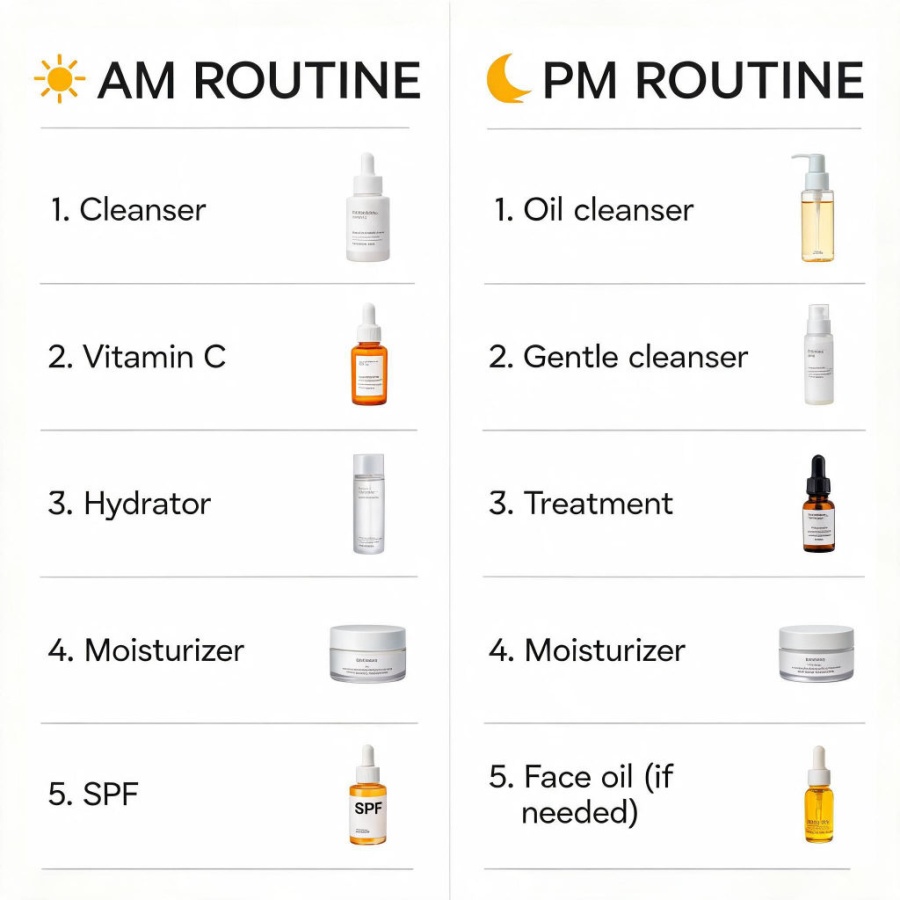
- Light cleanse or water rinse. A harsh, foaming wash can leave your face tight before the day even begins. For most skin types, lukewarm water or a gentle, non-foaming cleanser is enough.
- Load up an antioxidant. Pat your vitamin C serum onto dry skin. Vitamin C can brighten the look of skin and provide antioxidant support against UV-related damage—though it still never replaces sunscreen—according to this clinical review.
- Hydrate lightly. Choose airy lightweight skincare products, like gel-lotions or emulsions with glycerin, panthenol, or ectoin. They hydrate without leaving a heavy film under makeup.
- The non-negotiable SPF. Apply sunscreen separately as your final skincare step, then add makeup once it has set. The American Academy of Dermatology recommends broad-spectrum SPF 30 or higher after skincare and beneath makeup.
Nighttime Routine for Repair and Rest
This is when you use your targeted treatments to address specific concerns, but you have to do it smartly to avoid congestion and irritation.
- Oil cleanse. An oil or balm cleanser helps loosen water-resistant sunscreen, sebum, and long-wear makeup. Massage it onto dry skin, add water until it turns milky, then rinse.
- Water-based second cleanse. Follow with a gentle gel or cream wash to remove residue. Save your salicylic acid face wash for the nights you need it; your daily cleanser should leave skin comfortable, not squeaky.
- Choose one targeted treatment: a retinoid or an exfoliating acid. The American Academy of Dermatology warns that exfoliating alongside retinoids can worsen dryness. Alternating nights is a simple way to learn how to layer skincare with retinol without ending up red and flaky.
- Finish with moisturizer. After your treatment settles, seal everything in with a balanced cream. Ceramides, cholesterol, and fatty acids are natural parts of the skin barrier, and research supports their role in holding moisture in.
A quick note on slugging, though. Sealing prescription retinoids or strong direct acids under a thick layer of petroleum jelly like Vaseline can make strong actives feel more intense. It may trigger sudden irritation, so save it for recovery nights, not active nights.
Skincare Ingredients that Cancel Each Other Out
This is the high school chemistry lesson you wish you had. Some ingredients are frenemies, and knowing which skincare ingredients you should not mix can save you money—and irritation.
Benzoyl Peroxide + Some Retinoids
These two aren’t always enemies. Benzoyl peroxide can break down regular tretinoin, but research shows that adapalene stays stable. Using either combination may still leave sensitive skin dry or irritated.
Fix: If you use tretinoin, try benzoyl peroxide in the morning and tretinoin at night. If you use an adapalene–benzoyl peroxide product, follow the label or your dermatologist’s advice.
Low-pH Vitamin C + AHAs/BHAs
This is less of a dramatic “pH crash” and more of an irritation pile-up. Vitamin C and exfoliating acids can both be demanding, so layering them may leave sensitive skin stinging, dry, or red. A review of AHA studies confirms that irritation depends on the formula, strength, and how often you use it.
Fix: Give your skin some breathing room. Use Vitamin C in the morning and your exfoliating acid on selected nights.
Direct Acids + Copper Peptides
Strong acidic formulas may not be the best environment for delicate copper peptides, and brands often advise separating them.
Fix: Use peptides on acid-free nights rather than risking your expensive serum.
Retinoids + Other Strong Exfoliants
This is just overtaxing your skin. Both can be irritating, so stacking them may leave your skin dry and flaky. The AAD also recommends caution when exfoliating while using a retinoid.
Fix: Alternate nights and give each product room to work.
This isn’t fear-mongering—it’s layering skincare without wasting products or upsetting your skin.
Are You Accidentally Damaging Your Skin Barrier?
When skin feels rough, reaching for another acid peel is tempting. But more exfoliation can worsen an already irritated barrier and keep the cycle going.
See if any of these signs of a compromised skin barrier sound familiar:
- An unnatural, waxy plastic wrap shine on your forehead that looks clean but feels bone-dry and tight.
- A mild stinging sensation when you splash your face with plain lukewarm tap water.
- Clusters of tiny, uniform red bumps that aren’t quite pimples.
Barrier trouble can affect water loss, irritation, and the skin’s microbial balance. These symptoms can have other causes, though. If those bumps look more like clogged pores, this guide explains why whiteheads can appear overnight.
If you’re nodding along, it’s time for a skin vacation. Start with a 72-hour skin reset to remove the usual sources of irritation.
Pause every acid, peel, retinoid, and abrasive washcloth. Switch to a gentle cleanser, a plain fragrance-free moisturizer, and a comfortable broad-spectrum sunscreen until your skin feels calm again.
A review of skin-barrier research found that moisturizers can support repair and reduce water loss, but everyone’s recovery time is different. If your skin still stings after three days, keep the routine simple for longer. Persistent burning, swelling, or a rash deserves a dermatologist’s attention.
Sometimes, the emotional toll of skin issues is heavy, and using some clear skin affirmations might help you stay upbeat during the healing process.
Why Skincare Pilling Happens + How to Avoid It
It’s something to do with chemistry. Pilling happens when film-forming ingredients in products fail to set and instead clump together under friction.
A cosmetic-science study found that sunscreen, foundation, skin condition, and application method can all affect it. Sometimes, silicone polymers or thickeners like xanthan gum cause it too—try applying anything over aloe gel, and you’ll know what I’m talking about…
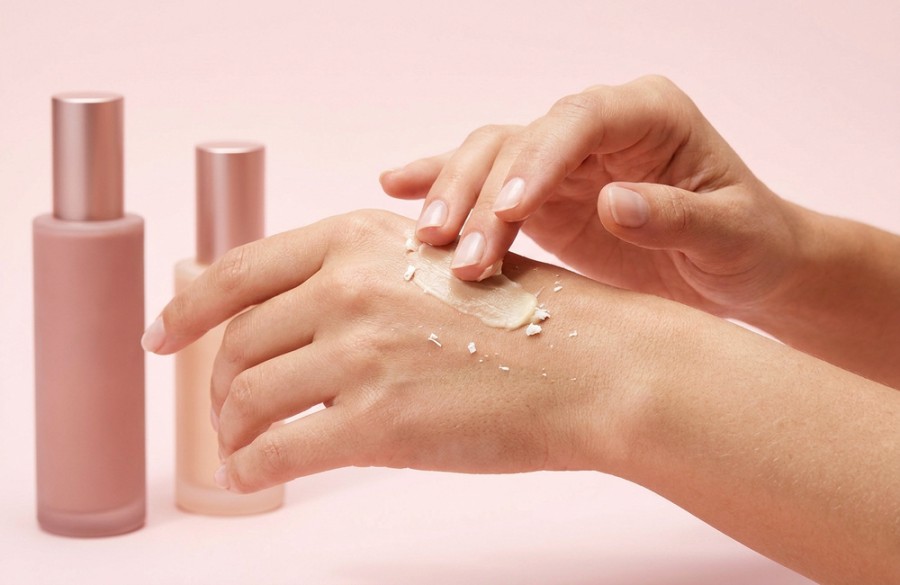
I learned this the hard way. I once layered high-percentage niacinamide over sticky snail mucin, then sealed it with a heavy moisturizer. By lunch, scratching my jaw produced eraser-like shavings—so much for feeling like a skincare brainiac.
So, how do you tackle it?
- Pat, don’t rub. This is the biggest game-changer. When you aggressively rub products in, you’re encouraging those long polymer chains to tangle and clump. Instead, use firm, directional pressing or patting motions. This lays down polymers in an even film on your skin.
- Portion control. More is not more. Dispensing pea- to nickel-sized amounts is usually enough. When you drown your skin in excess product, it can’t all absorb, leaving a residue on the surface that’s primed to pill.
Best Lightweight Skincare Ingredients That Hydrate Without Clogging Pores
If you’re in for a non-greasy skincare routine that actually deeply hydrates, these unsung heroes of hydration won’t clog your pores or leave you feeling sticky.
- Glycerin: The unglamorous gold standard for a reason. This inexpensive humectant pulls water into the upper layers of your skin and helps your barrier hold onto it. A review of glycerin research found that it improves hydration, supports barrier function, and helps protect skin from irritation.
- Panthenol (Pro-Vitamin B5): A soothing powerhouse that hydrates and supports barrier repair. In a controlled study, a dexpanthenol cream improved hydration and helped reduce roughness and redness.
- Beta-Glucan: Consider this your soothing hydration sidekick. Usually derived from oats or yeast, it helps skin hold onto moisture while calming that tight, uncomfortable feeling. Recently reviewed studies found improvements in hydration and barrier function. You may see claims that it’s 20% more hydrating than hyaluronic acid, but that specific number isn’t backed by a traceable study—so I wouldn’t use that as a selling point.
Your texture strategy matters, too. For hydrating without clogging pores, look for products labeled as gel-lotions, emulsions, or water-creams. These watery formulas deliver essential lipids without the heavy plant waxes or solid butters that can trap heat and sebum, especially in warm weather.
A Simple Skincare Routine When Your Face Feels Overwhelmed
A simple reset skincare routine is often the most effective. Here is a foundational plan you can return to anytime your skin feels stressed.
The skinimalism base routine:
- Morning: Gentle cleanse/rinse → Lightweight hydrating fluid → Daily broad-spectrum SPF.
- Evening: Oil cleanser → Mild cream cleanse → Barrier-repair moisturizer.
Once your skin feels balanced, reintroduce actives using a strategic cycling schedule.
The strategic active cycling schedule:
- Night 1 – Exfoliate: Use your gentle AHA or BHA fluid to loosen dead surface cells.
- Night 2 – Stimulate: Use your retinoid to trigger deep collagen production and cellular turnover.
- Nights 3 and 4 – Recover: Zero actives. Focus purely on replenishing your skin with humectants and ceramides to rebuild your barrier.
This schedule can make strong actives easier for your skin to tolerate.
Skincare Layering FAQs
Is toner necessary before serum?
No, it’s optional. If you enjoy using one, apply it after cleansing and before serum. Choose a hydrating toner, especially if the rest of your routine already contains strong actives.
Where does eye cream go in a skincare routine?
Apply eye cream after your serum and before moisturizer. Use a tiny amount and tap it gently around the orbital bone instead of rubbing it close to your eyes.
Can you layer two or three serums together?
Yes, as long as the ingredients get along and your skin tolerates them. Apply the lightest serum first, keep the lineup to two or three, and introduce new actives one at a time so you can spot irritation quickly.
Does face oil go before or after moisturizer?
Face oil usually goes after moisturizer because it helps seal everything in. It works especially well as the final step at night. If you are acne-prone, choose a lightweight option from this guide to non-comedogenic oils for the face.
Can sunscreen replace moisturizer?
Sometimes. If your sunscreen feels moisturizing enough, you may not need a separate cream in the morning. Just make sure you still apply the full recommended amount of broad-spectrum SPF 30 or higher rather than using a thin layer like moisturizer.
How should you patch-test a new active?
Apply a small amount to a patch of skin, such as the underside of your arm, twice daily for seven to ten days. If you experience redness, itching, swelling, or burning, wash it off and do not use it on your face. The American Academy of Dermatology recommends this simple test before adding a new product to your routine.
The Bottom Line
It’s time to take control of your skincare and stop letting viral marketing dictate your routine. Your face does not need eight different serums to look clear, hydrated, and glowing.
The most important takeaway is to listen to your skin’s texture. When it feels tight, pull back on the actives. When it pills, check your formulas for polymer clashes and ditch the heavy rubbing.
Mastering how to layer skincare is about understanding these simple principles, not about following a rigid, 12-step mandate. It’s about giving your skin what it needs, when it needs it.