
Fine lines, softening jawlines, and a loss of bounce happen naturally as skin matures.
RF beauty devices have surged in popularity to address these exact shifts at home, without clinic-level price tags. With consistent use, they can support collagen production and firm, smooth, and lift the skin over time.
So, here are the best at-home radio frequency skin tightening devices worth your money — including choices for beginners, premium users, low-effort routines, and anyone who wants a hybrid device with RF, LED, and infrared.
Let’s get right into it!
Contents
How the Six Devices Compare
| Device | Best For | Main Technology | Face or Body | Treatment Time | How Often |
|---|---|---|---|---|---|
| CurrentBody Skin RF | Best overall | RF | Face/neck | 5 min per area, up to ~70 min full face and neck | Once a week for 8 weeks |
| TriPollar STOP Vx 2 | Best premium | Multi-polar RF | Face/neck | 4–5 min per zone, ~15–20 min full face | 2–3x a week for 6–8 weeks |
| NEWA RF Device | Best clinical-backed option | RF | Face | 4 min per zone, ~16–24 min per session | 4–5x a week for the first month |
| Sensica Sensilift | Best low-effort | RF + massage | Face/neck | 5 min per area, ~20 min full face | Once a week for 8 weeks |
| Silk’n Titan Multiplatform | Best hybrid | RF + LED + infrared | Face/neck | 10–15 min per zone | 3x a week, then 1–2x for maintenance |
| Medicube Age-R Ultra Tune 40.68 | Best K-beauty pick | RF + microcurrent + LED | Face | 5–10 min per session | Up to 1–3x a day |
How Radio Frequency Tightens Skin
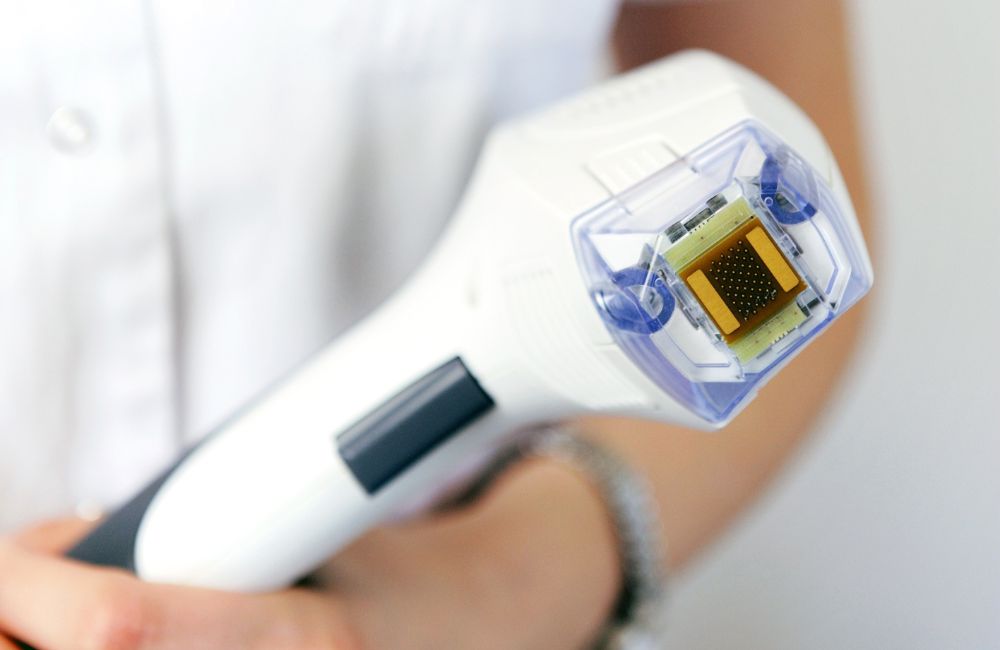
This non-invasive, anti-aging treatment warms the deeper layers of your skin to about 104°F / 40°C. That gentle heat firms the collagen you already have and encourages your skin to make more.
Here’s what happens during a session:
- The device warms your skin below the surface, enough to trigger a response, and not enough to cause damage.
- The collagen you already have tightens, so skin can look slightly firmer right away.
- Your skin starts building fresh collagen over the next few weeks. That’s where the real change comes from.
Nothing peels, because the heat works under the surface rather than on top of it. RF simply nudges your slowing collagen production back into gear.
In a clinic, a trained provider uses a much stronger machine and a session takes about an hour. At-home devices work the same way, only gentler—safe to use on yourself, but a little slower to show results.
Benefits of RF Skin Tightening
Firmer skin is the headline benefit, but it isn’t the only one worth knowing about before you buy.
- Tighter, firmer-looking skin. The main reason most people buy an RF device. The effect builds over a course of treatments rather than arriving all at once.
- Better texture and elasticity. Skin tends to look more even and bouncier, not just tighter.
- Softer fine lines and wrinkles. Research has linked RF treatment to visible improvement in wrinkles and skin laxity.
- Help with mild sun damage. RF has been studied for mild to moderate photoaging, so it can improve tone along with firmness.
- A subtle lift without surgery involved. It has even been studied as a non-surgical way to slim the face.
- Not just for your face. Some devices are cleared for the neck, décolletage, and chest too—areas that age early and get skipped in most routines. Several here are face-only, so check before you buy.
- No downtime. A little warmth or redness is normal, but you can get on with your day straight afterwards.
What Results to Expect and What Not to Expect
At-home radio frequency works, but only within realistic boundaries and with regular use.
It treats well early-stage skin changes, such as mild jawline softening, slight loss of bounce, crepey texture on the cheeks or neck, and fine expression lines.
It cannot fix significant skin sagging, heavy jowls, deep structural folds, or loose skin following major weight loss.
The devices will not replicate the dramatic lift of a surgical facelift, professional in-clinic RF microneedling, or dermal fillers.
How We Chose These Devices
Every device listed here comes from an established brand with real customer support, published safety information, and claims specific enough to check. Treatment times, temperatures, and technology details are taken from the manufacturers themselves rather than from retailer listings. I skipped the no-name marketplace wands and anything promising too-good-to-be-true claims.
The Best At-Home RF Skin Tightening Devices
1. CurrentBody Skin RF Radio Frequency Device
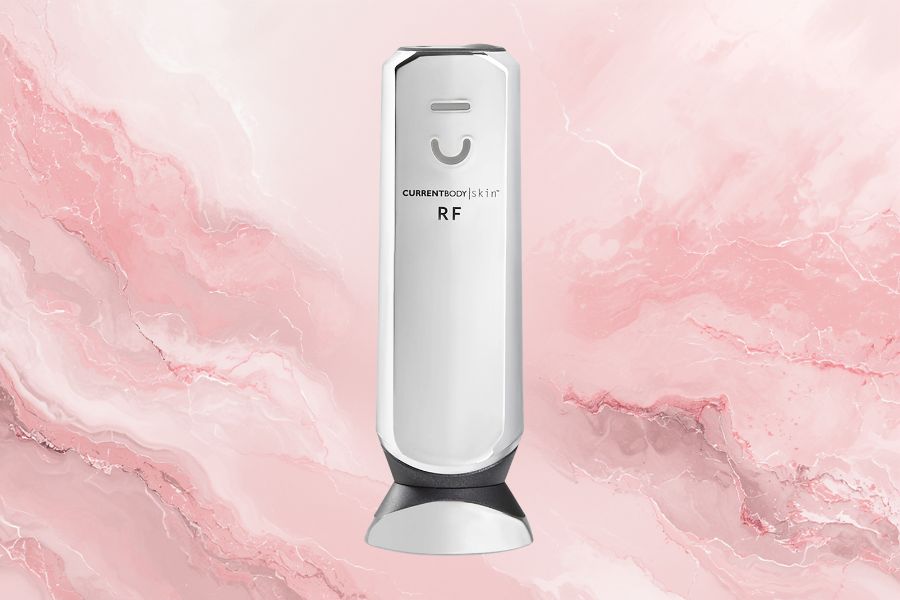
Who it’s for: Someone who wants a polished, reputable RF device and doesn’t mind a longer weekly routine.
Treatment time: 5 minutes per treatment area. CurrentBody’s full face-and-neck protocol covers 14 zones and takes around 70 minutes, used once a week for 8 weeks, then a top-up session every 4 to 8 weeks. If you only want to treat one area, like around the mouth, you can be done in about 20 minutes.
CurrentBody’s RF device takes the top spot because it has the right mix of brand trust, clear positioning, and beginner-friendly design.
It’s an at-home RF device that heats the skin to around 104°F / 40°C to support collagen remodeling, and the brand says 89% saw improvement in skin tightness in 8 weeks.
What stands out most is that it’s not a random 7-in-1 gadget with vague claims. It’s a focused RF tool for firming, plumping, and mild sagging.
The experience with this RF wand is simple and satisfying, especially for face and neck use. The warmth is lovely, closer to a hot stone massage than a beauty treatment, and it hangs around for a good twenty minutes after you finish. Skin can look smoother, tighter, and brighter with consistent sessions, making it a solid at-home option if you want RF benefits without going to a clinic.
It’s not effortless. RF takes patience, and if you want a quick 3-minute tool, this will feel like another chore. It also plugs into the wall rather than running on a battery, so those seventy minutes are spent sitting near a socket. Set aside a slot on a Sunday evening, though, and it stops feeling like one.
You have to use CurrentBody’s own gel, which is about $40 a bottle and stretches to roughly thirty full-face sessions, so it is a small recurring cost rather than a one-off.
Best for
Mild sagging, a softening jawline, fine lines, and a general loss of firmness. These are early-stage changes rather than significant laxity.
Pros
- Strong brand reputation
- Beginner-friendly
- Focused RF treatment
- Good for face and jawline concerns
- Sleek and modern design
Cons
- Pricey
- May feel time-consuming if you prefer quick treatments
- Face and neck only, not designed for body use
- Corded, so you treat beside a socket
- Gel refills are an ongoing cost
My honest take: It doesn’t overpromise, and in this category that’s rare. It won’t out-muscle TriPollar and it isn’t cheap, but it’s the one I’d point a first-time RF buyer towards without worrying they’d give up in week two.
2. TriPollar STOP Vx 2
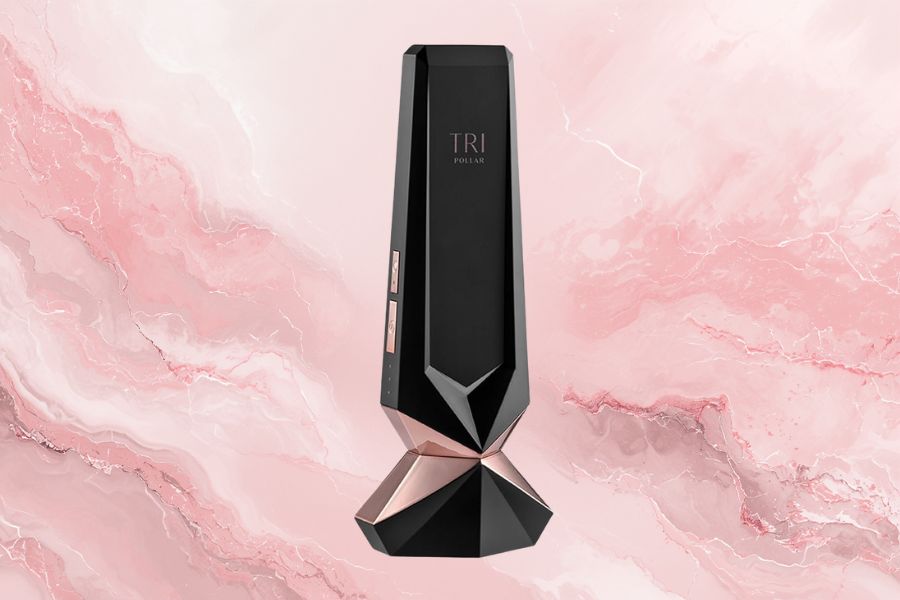
Who it’s for: A premium RF user who wants a stronger, more advanced device for contour and firmness.
Treatment time: Around 4 to 5 minutes per zone, which works out to roughly 15 to 20 minutes for a full face and neck. TriPollar recommends 2 to 3 sessions per week for 6 to 8 weeks, then maintenance a few times a month. This is one of the quicker full-face routines here.
TriPollar is one of the more established names in at-home RF, and the STOP Vx 2 is the serious beauty tool of the six. The device uses triple-wave TriPollar Multi-RF technology, thermal mapping, and adaptive vibration to create more even heating and a more personalized treatment experience.
Like CurrentBody, it runs off a mains supply rather than a battery, so it delivers the same full power on every pass instead of tapering off as a charge runs down.
Compared with CurrentBody, this one is more advanced and more sculpting-focused. It’s better suited for jawline definition, cheeks, nasolabial folds, fine lines, and early jowling — not just general plumpness.
This is one of the few at-home RF tools that genuinely feels built for visible firmness maintenance, but it still requires patience and proper technique. The RF heat itself is mild enough to zone out to.
The vibration mode is another story, though! Turn it up and it shifts from massage to something closer to tiny pinpricks, especially along the jaw where there is bone right under the tip. Start on the lowest setting and build up over a couple of weeks.
It’s not a “use it whenever you remember” kind of device. The best results will come from following the treatment protocol and sticking with it.
Price is the sticking point. This is not a device to buy out of casual curiosity about RF.
Budget for the gel as well. TriPollar’s Activator Gel is thick, you only want a thin layer of it (too much actually stops the device from working properly), and at around $59 a tube, it’s an expensive habit on this list.
Best for
Jawline definition, cheek firmness, early jowls, nasolabial folds, and fine lines. This is the most contour-focused device here, so it suits sagging that has started to change the shape of your face.
Pros
- Well established in at-home RF
- Premium technology that feels a step up from basic RF wands
- Good for jawline and cheek areas
- Better choice for experienced beauty-device users
Cons
- Expensive
- May be more than a beginner needs
- Corded, with the priciest gel refills here
- Vibration mode can feel uncomfortable
My honest take: This is the one I’d want if I were treating RF as a long-term habit rather than an experiment. The engineering truly feels like a step up.
3. Sensica Sensilift
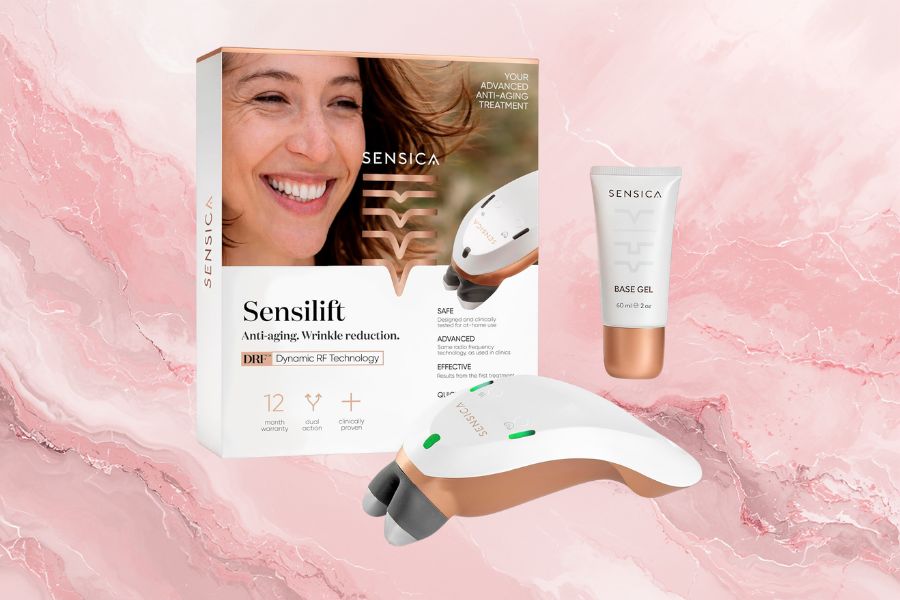
Who it’s for: Beginners, sensitive users, or anyone who wants the lowest-effort RF routine.
Treatment time: About 5 minutes per area, or roughly 20 minutes for a full face — just once a week. That once-weekly schedule is the main reason this one is so easy to stick with. The initial protocol runs 8 weeks, then you treat as needed.
Sensica Sensilift’s biggest strength is ease. It’s FDA-cleared, with Dynamic RF technology, a 1 MHz frequency, an auto-stop safety sensor at 104°F / 40°C, and a 60-day guarantee. That sensor cuts the heat the moment it reaches the threshold, so the device can’t run hotter than it should.
It runs from mains power rather than a battery, too, so there’s nothing to remember to charge — you plug in and go.
Sensilift works nicely for a simple anti-aging routine, especially around fine lines near the lips and eyes. The heat never builds into anything you would flinch from, and the little massage action makes it feel more like a warm facial than a treatment. Your skin may look a little flushed afterwards. That’s normal for RF and it settles on its own.
Sensilift feels far less intimidating than TriPollar, and that is its real advantage. It also explains why it can feel underpowered, and dramatic contouring is not what this device does. Gentle and comfortable is the whole point.
You will also need Sensica’s Base Gel, which is about $55 for 100ml.
Best for
Fine lines around the lips and eyes, and mild loss of firmness. The auto-stop sensor and once-weekly schedule also make it a gentle starting point if heat-based devices make you nervous.
Pros
- Easy to use, with a low-effort weekly schedule
- Good safety features
- Comfortable on the skin
- Reassuring for cautious first-timers
Cons
- Not the strongest device on the list
- May require ongoing maintenance
- Results are gradual
- Not cordless, so you are tethered to a socket
My honest take: The best device is the one you keep picking up, and twenty minutes once a week is something most people can actually keep. That counts for more than advanced settings you’ll never touch.
4. Silk’n Titan Multiplatform
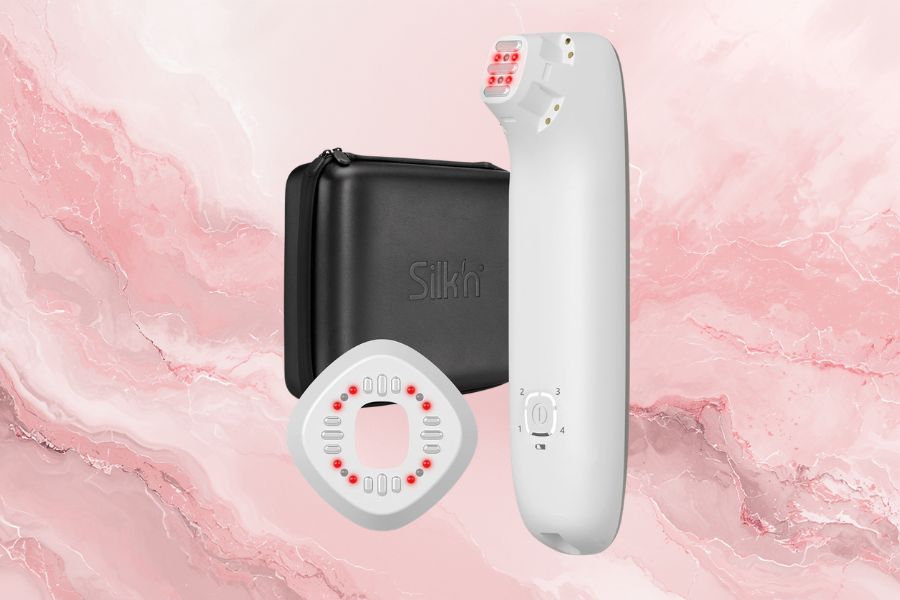
Who it’s for: Someone who wants a hybrid RF device for face and neck.
Treatment time: 10 to 15 minutes on each treatment zone, which makes it the longest per-area commitment on this list. Silk’n suggests starting with 3 sessions a week, then dropping to once or twice weekly for maintenance after about 8 to 10 weeks. Worth knowing before you buy: the battery runs around 40 minutes per charge.
It pairs radio frequency with LED light and infrared, and comes with an RF attachment and automatic shutdown. The battery is the real advantage, though: it’s properly cordless, and you can carry on using it while it charges, which is what makes that 40-minute charge workable across a full face.
This device is helpful if RF alone doesn’t feel like enough and you want a more complete anti-aging tool. It has a nice at-home facial gadget quality, especially for face and neck care.
Because you stay on each zone for so long, the heat creeps up gradually instead of arriving all at once, so it feels more like a warm compress than NEWA’s deeper heat. Results depend on sticking with it over several weeks.
Hybrid devices do ask more of you. More technologies sound impressive, but each one comes with its own instructions.
You do need gel with this one, though Silk’n puts a bottle in the box to start you off, so there’s nothing extra to buy on day one.
Best for
Crow’s feet, uneven texture, and loss of elasticity across both the face and neck.
Pros
- Multi-technology device, more versatile than simple RF tools
- Cordless, and usable while charging
- Good for face and neck
- Established brand
- Suits a complete anti-aging routine
Cons
- May feel less simple for beginners
- Requires careful use
- Can be pricey depending on the listing
- Extra technologies are wasted if you only want RF
My honest take: Multi-technology devices win on paper and lose in practice, because most people settle into one mode and ignore the rest. This one is genuinely good if you will learn all of it. If you won’t, buy something simpler and keep the difference.
5. Medicube Age-R Ultra Tune 40.68
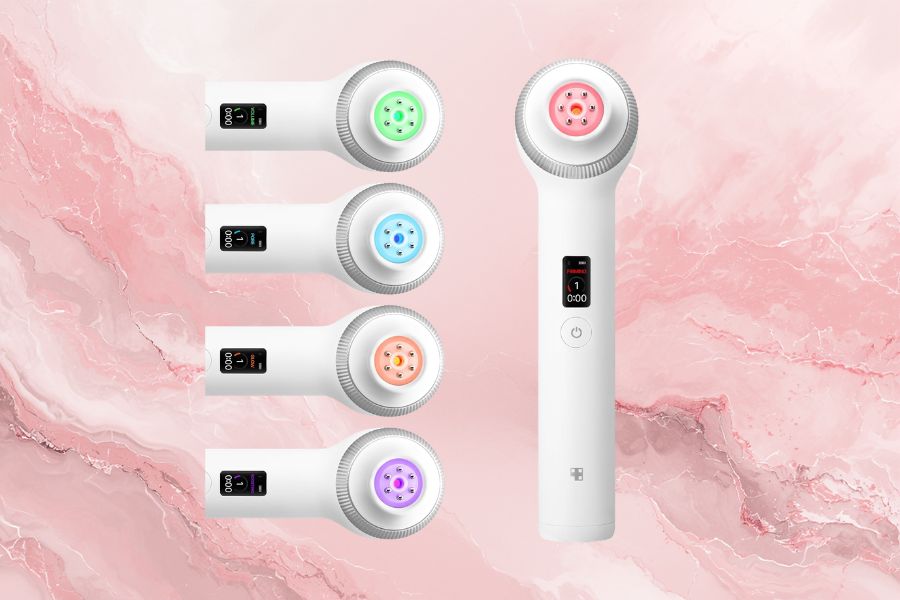
Who it’s for: K-beauty lovers who want a sleek, modern RF device with microcurrent-style benefits.
Treatment time: 5 to 10 minutes per session, and Medicube says it can be used 1 to 3 times a day. No conductive gel is required — just make sure your skincare has fully absorbed first. It’s easily the most routine-friendly option here if you want something you can pick up daily.
Medicube’s Age-R Ultra Tune feels less clinical and more like something a skincare lover would actually be excited to use.
The device pairs 40.68MHz high-frequency RF with microcurrent technology, LED modes, and adjustable intensity that adapts automatically to your skin’s resistance. It’s a newer release than most of this list, so stock comes and goes.
That gives it a nice point of difference: it isn’t just another RF device. It’s more of a beauty-tech hybrid. It is also the mildest of the six on the skin, gentle warmth with a faint fizz from the microcurrent rather than the deep heat of CurrentBody or NEWA. Some people barely feel anything.
Just be aware that Medicube rides on trend as much as track record. Buy from a reputable seller, and don’t expect instant sculpting just because the device is everywhere online. The technology underneath is real, and the daily-use design is what genuinely sets it apart here. It charges over USB and works cordless, which is a big part of why it’s so easy to pick up daily.
Skipping the gel is the quiet win here. There is nothing sticky to rinse off, nothing to reorder, and none of the $40 to $60 bottles the rest of this list runs on.
Best for
Skin elasticity, radiance, and fine lines. It leans towards glow and daily upkeep rather than serious tightening, which is why it fits so easily into a routine.
Pros
- Recognizable beauty-tech brand
- No conductive gel needed, and cordless
- Sleek, modern design
- Strong appeal for skincare and K-beauty fans
- Easy to fit into a daily routine
Cons
- May not be ideal for body use
- The least clinically established brand of the six
My honest take: This one looks most like something you’d actually want sitting on your bathroom shelf, which matters more than it sounds. It doesn’t have TriPollar’s engineering or NEWA’s paperwork, but a device you enjoy picking up daily will beat a better one you dread.
6. NEWA RF Wrinkle Reduction Device
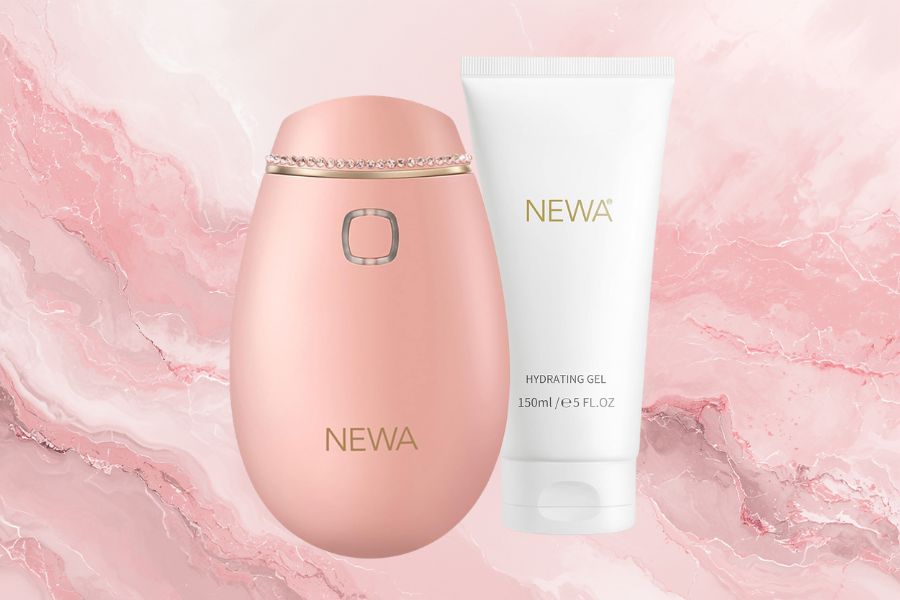
Who it’s for: Someone who wants a focused wrinkle device with regulatory backing rather than broad beauty-tech claims.
Treatment time: 4 minutes per zone, and NEWA is clear that you shouldn’t treat the same area for longer than that in a day. The face is divided into six zones, so a full session runs roughly 16 to 24 minutes depending on how many areas you treat. The brand suggests 4 to 5 sessions a week for the first month, then twice weekly for maintenance.
NEWA earns its place on this list because it has one of the strongest credibility points. NEWA’s FDA document describes it as an over-the-counter, home-use RF device that emits RF energy into the skin, heats tissue, and is intended to improve the appearance of wrinkles and rhytides.
That kind of paperwork is rare in this category, and it means the claims on the box have had to stand up to scrutiny.
A 12-week use window is a more realistic way to judge NEWA than a few quick sessions. It’s a steady, focused facial RF device—not an instant lifting tool.
It gets warm quickly, and a color change on the device tells you when you have hit the right range. Across the cheeks that reads as a warm facial massage. Over the temples and along the jaw, where there is less padding, it turns into more of a sharp tingle.
It does one job and nothing else. If you want body treatment or several technologies in one tool, look elsewhere. If wrinkles are the thing that actually bothers you, that narrowness is exactly what you want.
Do check which version you are buying, though. The Classic is the plug-in model, and using something four or five times a week with a cord trailing off it gets old quickly. NEWA+ is the cordless one.
The gel is the part long-term owners grumble about, not the device. It’s a thick, jelly-ish paste, you need to wipe it off the electrodes after every session, or it dries on, and a tube is sold as about a month’s supply, so it quietly adds up over a year.
Best for
Facial wrinkles, laugh lines, fine lines, mild jawline laxity, and plumper-looking skin. Wrinkle reduction is what this device is built around, and it is the one claim it can properly support.
Pros
- FDA-cleared positioning
- Good for facial wrinkles and firmness
- Focused, single-purpose RF treatment
- Less gimmicky than many multi-use devices
Cons
- Mainly for facial use, not body tightening
- RF only, with no LED or microcurrent modes
- Classic model is corded
- Thick gel that needs re-buying monthly
My honest take: Something is reassuring about a device that only claims one thing. NEWA isn’t exciting to look at and there are no extra modes to play with, but of everything on this list, its central claim is the one I’d trust most.
How to Choose the Best RF Skin Tightening Machine for Home Use
It can be overwhelming because so many of them promise lifted, tighter, younger-looking skin. Here’s what you should be looking for:
1. Choose a reputable brand
This is not the category where I’d go for the cheapest random device. RF uses heat and energy, so brand trust matters.
Look for the same things I screened for above: clear instructions, real customer support, published safety details, and warranty information.
Better-known brands like CurrentBody, TriPollar, NEWA, Sensica, Silk’n, and Medicube are simply easier to evaluate than no-name gadgets.
2. Look for safety features
The two that matter most are temperature control and a skin-contact sensor. Together, they stop the device from heating past its limit or firing when it isn’t touching your skin.
An auto shut-off and a built-in treatment timer work the other way, stopping you from overworking one area in a single session. Adjustable intensity lets you start low and build up as your skin gets used to the heat.
Beyond the hardware, look for clear usage instructions and check which conductive gel the brand recommends. Most RF devices need one — it helps the device glide and lets the energy transfer evenly, and going without can cause tugging, discomfort, or poor performance. A few, like Medicube’s, don’t require gel at all.
If a device gets hot but doesn’t explain how temperature is controlled, that’s a red flag.
3. Decide if you want RF-only or a hybrid device
Some devices focus only on RF. Others combine RF with LED, infrared, vibration, microcurrent, or massage.
RF-only devices are usually simpler and easier to understand.
Hybrid devices may feel more complete, but they can also be more confusing if you don’t know what each mode does.
Choose RF-only if you want it specifically. Choose a hybrid if you enjoy beauty tech and want a more multi-purpose tool.
4. Think about treatment time
Some devices only need a few minutes per session. Others require longer zone-by-zone treatments.
Be honest with yourself. If you barely have time for skincare, choose the device you’ll actually use—not the fanciest one. The comparison table above lays out the full range.
Also factor in frequency, not just session length. A 70-minute session once a week is a very different commitment from 15 minutes three times a week.
5. Set a budget before you shop
Generic marketplace RF wands start at around $100, but the established brands worth trusting sit higher, between roughly $300 and $750. Discounts are usually available, so check for a sale before you pay full price.
Spending more doesn’t guarantee better results, but be cautious at the very bottom of the price range. The cheapest devices often skip the temperature control and skin-contact sensors that make RF safe to use at home.
Then budget for running costs, which almost nobody mentions. Five of the six devices here need conductive gel at roughly $40 to $60 a bottle, and CurrentBody quotes about 30 full-face treatments per 100ml — so a committed user re-buys several times a year. Only Medicube skips gel entirely, which quietly makes it the cheapest of the six to run.
It’s also worth weighing against the alternative. A single in-clinic RF session can cost a few hundred dollars and you’ll usually need a course of them, so a device you genuinely keep using can work out cheaper over a year or two.
Before You Use an At-Home RF Device
Every device has its own treatment time, intensity levels, and safety guidance, so read the instructions carefully.
Avoid using RF devices if you:
- Are pregnant
- Have a pacemaker or implanted electronic device
- Have metal implants in the treatment area
- Have active skin infections
- Have open wounds, burns, or irritated skin
- Have a rosacea, eczema, or psoriasis flare-up
- Recently had fillers, Botox, lasers, chemical peels, or microneedling
- Have a history of keloids or poor wound healing
- Are using prescription skincare that makes your skin more sensitive
Also, don’t use RF directly over the thyroid area on the front of the neck unless the manufacturer specifically says it’s safe.
When in doubt, check with a dermatologist first. Your skin is precious, and no beauty device is worth irritation, burns, or unnecessary risk.
How Often Should You Use an At-Home RF Device?
It depends on the device.
Some brands recommend once a week, while others may suggest several sessions per week during the first few weeks. Always follow the instructions for your specific device.
As a general rule:
- Start with the lowest comfortable setting
- Don’t exceed the recommended treatment time
- Give your skin time to recover between sessions
Using RF more often than recommended won’t necessarily speed up results—and it may increase the chance of irritation.
When Will You See Results?
Some people notice a temporary glow or plumper look after the first treatment, mostly from the warmth and increased circulation.
For real firmness and wrinkle improvement, give it time.
Most at-home RF devices take at least 8 to 12 weeks of consistent use before you can judge results properly. If skin laxity is more noticeable, it may take longer.
Take photos before you start, then compare every few weeks in the same lighting. It’s much easier to notice subtle changes that way.
Are At-Home RF Devices Safe?
These devices are generally safe when used correctly, especially when they come from reputable brands and include built-in safety features.
That said, RF still uses heat. Overusing the device, skipping the gel on devices that need it, pressing too hard, or treating skin that’s already irritated can leave you with redness, warmth, tingling, dryness, or temporary swelling — and burns, if you get it badly wrong. Follow the instructions and don’t treat for longer than recommended.
RF vs Microcurrent: what’s the difference?
RF and microcurrent are often confused, but they work differently.
Radio frequency uses heat to warm deeper layers of the skin and support collagen-related firmness over time.
Whereas microcurrent uses low-level electrical currents to stimulate facial muscles and create a temporarily lifted, toned look.
Put simply:
- Choose RF for firmness, wrinkles, and skin texture.
- Choose microcurrent for facial toning and a lifted look.
- Choose a hybrid device if you want both.
Frequently Asked Questions
Do at-home RF devices really tighten skin?
They can help improve the appearance of mild firmness loss, fine lines, and skin texture with consistent use. Results are typically gradual and subtler than professional treatments.
Can RF damage your face?
It can, if you use it incorrectly — irritation and burns are both possible. Following the safety guidance above keeps that risk low: use the recommended gel, don’t over-treat, and never treat broken, inflamed, or freshly treated skin.
Is RF skin tightening better than ultrasound?
RF and ultrasound work differently. RF is commonly used for surface-level firmness and collagen support, while ultrasound may reach deeper layers. The better option depends on your skin goals, comfort level, and whether you’re using an at-home or professional treatment.
Are RF devices safe for darker skin tones?
RF often suits many skin tones because it doesn’t target pigment the same way some lasers do. However, darker skin can still experience irritation or post-inflammatory hyperpigmentation if the skin is burned or over-treated, so safe use is important.
Can I use RF after Botox or fillers?
Not over recently treated areas, until your provider clears it. Waiting periods vary after Botox, fillers, lasers, peels, or microneedling, so ask your dermatologist or injector for a timeline tailored to you.
The takeaway
If your skin is starting to look a little less bouncy, your jawline feels softer, or fine lines are getting harder to ignore, at-home radio-frequency skin tightening devices are worth adding to your routine.
At-home RF only works if you stick with it, so choose the routine you actually have: CurrentBody for a foolproof start, TriPollar for sculpting, Sensica for 20 minutes on a Sunday, NEWA if wrinkles are the only concern, Silk’n for multi-light therapy, and Medicube for daily glow-ups.
Commit to eight to twelve weeks of steady sessions, and let the device do the work!

Hi there. I’m thinking about buying a skin tightening machine for my wife for Christmas as she sounds interested in one. The review of yours I like the most was for the JEOFARN Device – The Expert Made. The only place I can find this online is gosupps.com. I see other skin tightening machines on Amazon.ca that look very similar but I’m not sure of the quality.
The Jeofarn is $618 CDN on gosupp. Do you know who else sells this product?
Hy Mariyam,
I’m Andreea , I want to buy one JEOFARN device from Europe or from USA if there isn’t in Europe. I saw many reviews where the people complained that they ordered branded products and they received fake/ unbranded products. Can you help with some examples of trusted sources? Many thanks 😊
I am new to these devices, needless to say, I don’t much about any of them. I have suffered from depression for thelast 30+ years. I stopped caring for my skin a long time ago. My health is not good, so I look way older than my twin sister. I hardly ever go outside because I look so bad and my hair is falling out. Should I seek professional help before buy a device? I don’t know what microneedling is compared to these facial wands…, so I need a lot of help!