
Growing up, I remember hearing about all sorts of kitchen ingredients being used for skincare. Milk was one of them. It was supposed to soften the skin, improve its appearance and even help with pigmentation. But how much of that is actually true?
Cow’s milk is rich in fats, proteins and small amounts of lactic acid, which makes it interesting from a skincare perspective.
So, I wanted to look beyond the traditional claims and understand what cow’s milk can realistically do for the skin, what the research says, and some milk recipes worth making. I’ll also cover a few precautions worth knowing before experimenting with kitchen ingredients on your face.

Is It Good for the Face?
Yes, if your skin is dry, flaky, windburned or sensitive. You can use it as a short rinse or compress, which calms irritated barriers without the stinging that can come with commercial alcohols or synthetic fragrances.
No, if your pores clog easily or you’re mid-breakout. Although milk on your face isn’t proven to cause breakouts, it’s just not a bet we’d place on an oily, congested T-zone.
A softer feeling right after rinsing doesn’t mean your skin got more hydrated long-term. A lot of that is simply the cooling effect of a cold liquid and the light residue milk leaves behind. It’s a delightful surface rinse that can’t replace your actual moisturizer, and don’t expect brightening or texture correction from it.
What Cow Milk Actually Does on Your Skin
Fresh cow milk is a natural cocktail of fats, proteins, and a tiny splash of exfoliating acid that works nicely on a surface level.
Lactic acid, a mild member of the AHA family, is found in milk. But it’s extremely diluted. There isn’t good evidence that this trace amount produces meaningful exfoliation the way a formulated product does. It isn’t comparable to a 5 to 10% lactic acid serum in strength, pH, or effect, so don’t expect milk to do a serum’s job.
At the same time, donkey milk gets talked about as the trendier dairy option in skincare circles, and for good reason: it’s naturally leaner than cow milk, carries more vitamin C, and shows up in formulated creams targeting barrier repair. Cow milk, by comparison, leans heavier on butterfat, which is part of why it suits dry skin more than oily skin.
Whole milk is rich in those butterfats and lipids, and when your face feels tight after a windy afternoon, they can sit on rough patches and bring some quick comfort and bounce to the skin. Milk also contains casein and whey proteins, though it’s a stretch to call them a proven moisturizing treatment once they’re rinsed off your skin minutes later.
Subtle traces of vitamins A and D are in the mix too. Splashing dairy on your cheeks won’t replace a balanced diet, obviously, but it gives stressed skin a quick conditioning touch before you move into your actual routine.
One last thing to remember is the pH. Whole milk has a neutral, mild pH of around 6.5 to 6.7. That’s exactly why it feels calm on contact, and exactly why it’s fundamentally a soothing rinse rather than anything more active.
Does Cow Milk Work for Skin Whitening, Lightening and Pigmentation?
One of the most searched questions on the internet is whether cow milk can whiten or lighten skin. The answer is no.
Fresh Milk won’t bleach your skin, change your natural tone, or act like hydroquinone. What people often mistake for whitening is simply the glow of dull, dead surface cells washing away.
For stubborn pigmentation like sun spots, post-inflammatory marks, or melasma, milk has very little to offer. It does contain lactic acid, a real skincare ingredient for brightening uneven tone, but the concentration in grocery store milk is far too low and its pH too neutral to meaningfully trigger cell turnover.
If deep discoloration is your actual concern, you need targeted actives like vitamin C, azelaic acid, or an actual pH-balanced lactic acid serum. Milk can soften rough skin. It won’t erase discoloration, no matter how many times that claim circulates online.
Raw vs. Pasteurized vs. Boiled
If you spend any time on wellness forums, TikTok, or Reddit, you might have seen people swearing that unpasteurized raw milk from a local dairy farm is the holy grail for your face.
Raw milk can harbor live bacteria and pathogens, and the CDC has repeatedly tied unpasteurized dairy to a disproportionate share of foodborne illness outbreaks. If your skin has micro-tears, active eczema, or broken blemishes, introducing unpasteurized dairy straight onto your face is just inviting redness and bacterial flare-ups you didn’t need.
So what should you actually reach for?
Chilled pasteurized whole milk is your go-to here. Pasteurization removes the harmful bacteria and leaves the soothing fats and proteins exactly where you want them.
Fresh cream or heavy cream is nourishing for flaky elbows, dry knuckles, and parched winter cheeks, but it’s rich and heavy. Keep it off your T-zone and save it for cracked winter hands instead.
One word of caution: organic milk isn’t automatically a cleaner or safer choice for your skin. Organic certification and pasteurization are two separate things, and going organic doesn’t guarantee milk is free of every possible residue. So, always go for pasteurized.
Simple Cow Milk Recipes For Skin That Work
These take about five minutes each, and odds are you already have everything sitting in your kitchen right now.
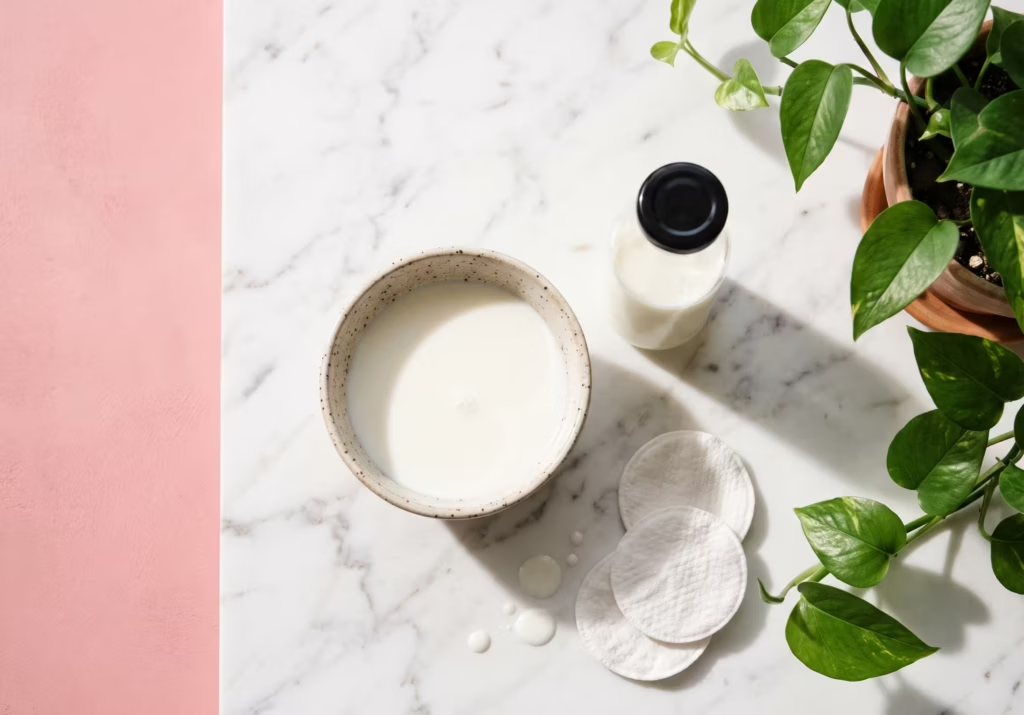
1. The 10-Minute Cold Milk Compress
Best for: Sunburn, hot flushes, windburned cheeks, or tight, irritated skin.
When your face feels hot and reactive, splashing warm water on it only makes the stinging worse. A cold milk compress pulls the heat out immediately, and it’s genuinely relieving after a hot sunny day. The feeling of chilled milk instantly wakes up my exhausted face.
What you need: 2 tablespoons of cold pasteurized whole milk from the fridge and a couple of clean cotton rounds or a soft, clean cotton washcloth.
How to do it: Pour the cold milk into a small ramekin, soak your cotton pads, and lay them over your reddest areas. Let them rest for 5 to 7 minutes. Cool temperatures constrict surface vessels while the milk calms the burn. Rinse gently with cool water and pat dry.
2. The Brightening Oat & Milk Clarifying Mask
Best for: Dull, tired skin that needs a gentle polish.
Instead of aggressive walnut or sugar scrubs that scratch fragile skin barriers, finely ground oats and milk lift away dead surface flakes and keep skin calm. The finer the oats, the creamier the consistency will be!
What you need: 1 tablespoon finely ground colloidal oatmeal (or rolled oats pulsed in a coffee grinder), 1 to 2 tablespoons cold whole milk, and an optional drop of pure raw honey.
How to do it: Stir into a smooth paste. Smooth it over clean skin and leave it on for 8 to 10 minutes. The rule here is to never let it dry stiff or crack on your face, as that tugs at your skin. Rinse with lukewarm water using soft, gentle circles.
3. The Honey & Milk Hydration Splash
Best for: Dehydrated skin that feels like paper after washing.
Honey is a classic humectant that draws moisture in, while the fats in milk help keep dry indoor air from stealing it back out. This mask, when whipped together, feels sticky while applied, but so worth it when it relieves the dryness.
What you need: 1 tablespoon whole milk and ½ teaspoon raw honey, like wildflower or clover honey.
How to do it: Warm the honey slightly so it melts into the milk. Pat the mixture onto your face with clean fingertips. Leave it on for 5 to 10 minutes while you brush your teeth, then rinse clean. Skin feels softer right away.
4. The Soothing Milk & Kaolin Clay Mask
Best for: combination skin that wants clearer pores without the stripped, tight feeling.
Clay alone can leave sensitive skin feeling tight and parched. Blend white kaolin with whole milk and you get the pore-clearing without the squeaky, stripped finish. My oily skin loves this, especially on a summer day.
What you need: 1 tablespoon cosmetic white kaolin clay–from health food stores or online–and 1 to 2 tablespoons cold whole milk.
How to do it: Mix into a creamy mask. Brush it over your T-zone and let it sit for 5 to 7 minutes, until partially dry. Rinse thoroughly with a damp washcloth before it turns chalky.
Who Should Skip Cow Milk Entirely…
As comforting as milk can be, it comes with potential side effects if used on the wrong skin.
There isn’t strong research establishing that applying milk to your face causes acne, but the theory makes sense given milk’s butterfat content, and it’s reasonable to take seriously if you’re acne-prone or already dealing with congestion. I wouldn’t recommend a homemade milk mask as an acne treatment either way. So, stick with ingredients that have actual evidence behind them for managing breakouts.
If you have a known dairy protein allergy, skip milk-based masks altogether, applying it topically can trigger hives, itching, or contact dermatitis fast.
Bacterial risk is real with unpasteurized milk especially, which can aggravate active facial eczema or infect open blemishes.
And don’t sleep in it. A milk mask left on overnight doesn’t stay a milk mask, it dries down into a sticky, sour film that grabs onto pillow dust and whatever else lands on your face while you sleep. Wake up to that, and you’re not looking at soft, glowy skin, but a fresh round of clogged pores. Set a timer and rinse it off.
The takeaway
Using cow milk for skin is a nice little ritual, but can’t replace a real skincare treatment. If you enjoy a cold milk compress or a honey-milk splash on a lazy morning, there’s no harm in it, and I get the appeal of a kitchen remedy that costs nothing.
Just don’t mistake that comfort for results. If you actually want to fade dark spots, smooth texture, or treat acne, that work belongs to formulated products with real, measured actives.
When applying milk to your skin, stick to pasteurized, use it once or twice a week, rinse within 10 to 15 minutes, and never sleep in it. If you’re breakout-prone, skip letting milk touch your skin and go for an oil-free lactic acid serum instead.